
Leadership Alumni

Rawan Shahatit
Senior Cardiac Sonographer at Memorial Hermann Center for Advanced Heart Failure
My capstone, The Wait and the Weight: Emotional Responses to Heart Allocation Among Transplant Patients, focused on the emotional experiences of heart transplant recipients. I wanted to understand what patients went through while waiting for a heart, how they coped, and whether the emotional weight of the experience continued after transplant. Most importantly, the project aimed to identify ways to better support patients throughout that experience.
After my capstone defense, I was offered the opportunity to help develop and start a program at our clinic based on my findings. This will give me the chance to turn my research into real support for advanced heart failure and transplant patients, with a focus on their emotional needs throughout their journey.
The MSHL program gave me the confidence to take a question that came from caring for these patients and turn it into meaningful research. It helped me see that I can make an impact not only through cardiac imaging but also through research, leadership, and the development of patient-centered programs that support patients’ mental and emotional well-being.
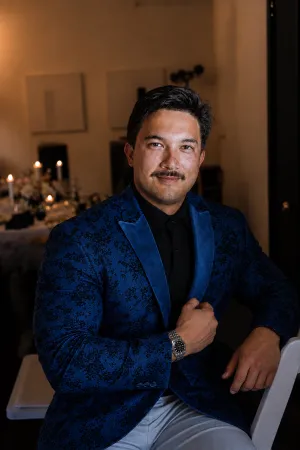
Korrey Siracusa
Chief Operation Officer, Butcher's Finest LLC
I developed a high school course in Sports Psychology for my capstone project, Mental Health and Performance: Applying Sports Psychology for High School Students. It applies evidence-based sports psychology techniques — goal setting, self-talk, visualization, and emotional regulation — to help students build focus, confidence, and resilience. The course grew out of a real gap I saw: schools talk about mental health but rarely teach the actual skills to manage it, so support tends to be reactive rather than preventative. I designed a five-module curriculum that moves students from understanding psychological factors, to building mental skills, to managing stress and emotions, to examining team/class culture, and finally to creating an individualized support plan — with an applied assessment model (written analysis, role-play demonstration, and personal reflection) to test whether students can actually use the skills, not just recall them.
While the course was designed for a high school setting, I'm applying what I learned directly in my current role, where I oversee hundreds of contractors who are on the road for weeks at a time, away from their families. The same mental skills — stress management, emotional regulation, resilience through setbacks — translate directly to that environment, and I'm bringing those tools to how I support my team. I've also found an opportunity to apply the course itself: through my involvement with high school baseball, I'm able to showcase these skills directly to student athletes, showing them how the mental side of sports builds life skills that carry them well beyond the field.
The MSHL showed me I'm capable of going further than I thought I could. When I started this project, I was intimidated by how much stronger other people's projects seemed, and I didn't think mine carried the same weight — but the more I researched, the more I saw a real, documented gap between what schools say about mental health and what they actually teach students to do about it. Having gone through performance anxiety and self-criticism myself, I could see firsthand how these struggles affect people, and that gave me both the motivation and the credibility to build something that could actually help others handle it before they have to learn the hard way.
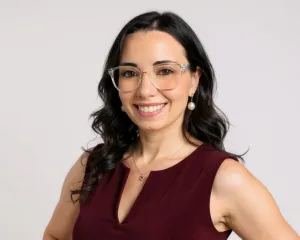
Desiree Lerma
Advanced Cardiac Sonographer, Memorial Hermann Center for Advanced Heart Failure Houston, Texas Medical Center
My capstone, Voices From the Field: Cardiac Sonographers’ Perceptions of Clinical Readiness, Professional Development, and Career Sustainability, focused on the perspectives of practicing cardiac sonographers and what their experiences can tell us about the workforce beyond technical competency. I examined the transition into independent practice, mentorship and professional development, workplace experience, and career sustainability to better understand where sonographers feel supported and where gaps may exist.
The project identified several areas where healthcare leaders can make a meaningful difference, including structured onboarding, formal mentorship, career-development pathways, workload and ergonomic support, and greater recognition of the sonographer’s role.
Now I’m currently involved in developing an Advanced Cardiac Sonography program. My goal is to help create a pathway for experienced sonographers to advance clinically through specialized education and expanded roles, while creating opportunities for professional growth beyond traditional management positions.
The MSHL program taught me to look at challenges I see in healthcare differently, not just to recognize a problem, but to study it, use evidence to better understand it, and translate those findings into something actionable. It gave me much more confidence in research, program development, and in using my clinical experience to drive change beyond my day-to-day role.
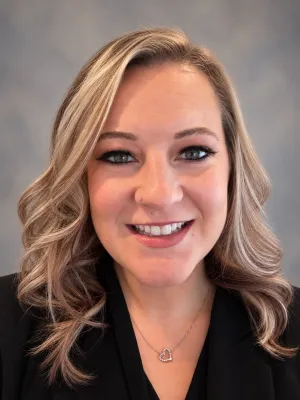
Lea Eberly
Clinical Dental Hygienist at Hughes and Hughes Family Dentistry and Dental Hygiene Clinical Instructor at Lancaster County Career & Technology Center
My capstone project, Knowledge and Use of Ergonomic Practices Among Dental Hygienists, explored dental hygienists’ knowledge of ergonomic principles and how consistently those practices are incorporated into clinical care. I also examined factors that may make it difficult for hygienists to use proper ergonomics, including time constraints, equipment, workplace support, and training.
My research identified an opportunity for additional ergonomic education and training for both dental hygiene students and practicing dental hygienists. Although participants generally demonstrated strong ergonomic knowledge, certain practices were not consistently incorporated into the workday. The findings support educational opportunities, such as continuing education and increased ergonomic training within dental hygiene programs, to help hygienists better apply ergonomic principles in everyday clinical practice.
The MSHL program’s teaching track helped me learn how to develop effective lesson plans, create meaningful learning experiences, and become a more confident and well-rounded educator.
Olivia Simpson
Radiologic Technologist, The Vancouver Clinic
For my capstone project, I created a Human-Centered Leadership Certificate program for healthcare professionals. This project was created to combat health inequality and to create greater outcomes for employees and patients. I was able to create a curriculum that can be used for a certificate program.
Through this program I became more confident in my beliefs as a leader, which specifically came from the freedom of creating my capstone project. Being able to work with thoughtful and resourceful professors through leadership and teaching courses showed me how to be an educator and gave me confidence that one day I can be as great of a professor as them.
Caylin Marshall
Registered Vascular Technologist
Norton Healthcare, Downtown Louisville, KY
My capstone project surveyed individuals who have worked in the field with varying levels of experience, education, and clinical environments.
Completing the program was what I started out wanting in the beginning from this project. Just another stepping stone in my educational and professional career that I knew would open opportunities down the road. What I gained along the way was substantially more than just a degree. I was able to take classes and earn a Lean Six Sigma black belt certification, opening avenues into a world I didn’t know existed and aiding me in examining aspects of my projects in ways I wouldn’t have thought of before. That gave me tools to add depth and draw conclusions that would have otherwise been left unexplored. I was able to see and read through responses from technologists all over the country about their experiences and it contributed to a bigger picture of what our profession is really like and where things can be improved.
I have the opportunity to present at an SVU (Society for Vascular Ultrasound) conference, have been asked about publishing my findings, and I know these are just the first of many opportunities that have come from my musings about our career and the policies that could make it more sustainable in the long run. I am excited to see where else this project will take me.
I started this program right after completing my undergrad degree, and it took me several years to complete it because of things in life that came up but ultimately I made the decision to just get it done regardless of what it takes. It was the best decision I could make because I have become better at expressing myself in writing professionally, learned to look at things from different perspectives without bias, interacting with others from different professional backgrounds and learning how I could apply skills from courses throughout this program in my career as well as personally
Tessa Simpson

My project, "American Indian access to preventative healthcare while in an urban setting,” focused on the Little Shell Tribe of Chippewa Indians, a newly federally recognized tribe that does not live on a traditional Indian Reservation. My studies in this program have helped equip me with the skills to address the needs of underserved populations and expand access to preventive healthcare, a core focus of my career goals. I am incredibly thankful for the support and guidance I received from my instructors and capstone committee.
Leti Schonover
Ultrasound Supervisor, Providence Maternal-Fetal Medicine and Providence Women's Clinics, Portland, OR
My capstone examined whether wildfire smoke exposure during pregnancy is linked to neonatal outcomes. , comparing Oregon birth cohorts from 2015 and 2019, two years with markedly different wildfire severity.
Completing this capstone and the MSHL program overall opens the door to more comprehensive leadership roles, where I can make an impact for more people. It's given me the research fluency and systems-level thinking to pursue those opportunities with confidence.
The MSHL program strengthened the full range of competencies I rely on as a healthcare leader: accountability, ethical decision-making, systems-change, transformational leadership, health informatics, and quality improvement, among others. The capstone specifically gave me a profound, hands-on understanding of research methodology, building a dataset, running my own analysis, and defending findings, which now informs how I evaluate evidence and drive quality initiatives as a leader.
Sue Poston

My final capstone project was formed to bring together the knowledge and skills that were methodically taught in the program through experiential learning. With guidance from the program faculty, I learned the proper process and skills to gather previous research, review data, and write the thorough Capstone. The instructional team also encouraged me to submit the research idea to the American Society of Echocardiography (ASE) for Abstract publication. My Capstone paper was then accepted to present on a national level in Nashville, Tennessee in September. I will always be thankful for my learning experience and the entire instructional team at OIT in this program
h Gilles
Having started my graduate degree journey almost 7 years ago, burnout was a real thing when it came time to refine and present my capstone project. Dr. Nathenson and my capstone committee provided the feedback and support I needed to successfully complete my project! Trust the process, put in the work, and get it done!

Mindy Peck
Completing my Master’s degree was both challenging and rewarding. The experience pushed me to grow as a leader, strengthen my problem-solving skills, and gain a deeper understanding of how to improve patient care and healthcare operations. It was a demanding journey, but one that truly prepared me for greater responsibility in healthcare leadership.