


About the Doctor of Physical Therapy Program

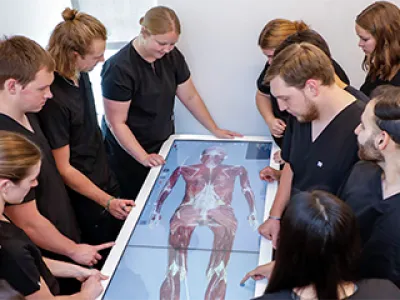
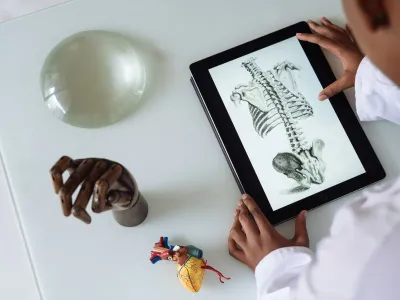
The Doctor of Physical Therapy (DPT) is a joint Oregon Tech and Oregon Health & Science University (OHSU) program that will provide a comprehensive entry-level and post-baccalaureate DPT education, with the unique focus of preparing high quality graduates with the skills to become practitioners of choice and leaders in rural physical therapy practice. The DPT program will ensure graduates develop competence in the diagnosis and treatment of patients with health or medical conditions that may affect movement and mobility.
Graduates will complete all eligibility requirements to sit for the state licensure exam and will be prepared for employment as autonomous practitioners in a variety of clinical settings. As led by the American Physical Therapy Association (APTA), graduates will be encouraged to pursue advanced learning and mentorship opportunities, including but not limited to:
- Residency and Fellowship
- ABPTS Specialist Certification
- Credentialed Clinical Instructor Program
- Post-Professional Degree
- Leadership Development
- Advanced Proficiency Pathways
Clinical Training Sites
Clinical training sites throughout Southern Oregon and in other rural communities have been identified, serving the essential critical function for preparing practitioners for the exciting generalist roles required in serving rural health communities. In addition, we seek to provide an important linkage between students on rotations, clinical and core faculty given the joint program with Oregon Tech and OHSU. Oregon’s academic medical center, OHSU, provides experiences across a range of clinical settings including high complexity acute care and ICU, pediatrics, and outpatient rehab across a range of specialty areas.
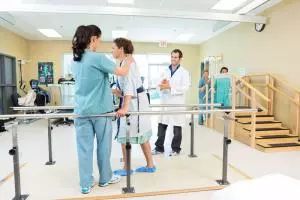
Oregon Tech-OHSU physical therapy professionals will be uniquely prepared to practice in rural communities and treat a variety of physical therapy needs. This includes working with diverse patients with a variety of socioeconomic backgrounds and conditions. Having access to high quality PT providers will create a healthier Oregon with more equitable care across the state.



Physical therapists may work in:

Dr. Marybeth Grant-Beuttler is a full, tenured professor and the program director for the Oregon Tech/Oregon Health Sciences University Doctor of Physical Therapy Program. She has been teaching in entry-level physical therapy programs since September 1998 and a core faculty member at Oregon Tech since 2022. As a practicing physical therapist, Dr. Grant-Beuttler has been a Certified Pediatric Specialist since 2006. She has worked in most areas of pediatric practice, including, a large children’s hospital as an acute care clinician, a Neonatal Intensive Care Unit, and acute pediatric wound care, a school district, early intervention, acute pediatric rehabilitation, and pediatric outpatient center. Dr. Grant-Beuttler advocates for experiential learning in her courses and has a long history running integrated clinical experiences including:
• Shapes- a middle school PE class for children who met the criteria for and self-identified as Overweight or obese,
• Balanced Families- a weekly dance class for children with neurological movement disorders and a concurrent support group for their families,
• Toe Walking group- a weekly activity program for children who toe walk,
• Social Gaming Club- With a local clinic, Tater Tots, Dr. Kayla Taylor and Dr. Grant-Beuttler, coordinate an ICE
• Mini-Kickers- a YMCA supported community group focused on teaching 2–4-year-olds to play soccer.
Her research focuses on promoting the development of gait and postural control in standing and function with children. She works to develop technology systems that supports rehearsal of motor skills in the natural environment.
Beyond the university and clinic, Dr. Grant-Beuttler shows and races Scottish Deerhounds and Silken Windhounds and loves to run, climb, and kayak.
Dr. Grant-Beuttler has been the recipient of:
• the California Physical Therapy Associations Faculty Research Award in October 2016,
• the Unit Faculty Excellence Award from Chapman University in recognition of excellence in teaching, creative/scholarly, and service in April 2018,
• the Valerie Scudder Award from Chapman University in recognition of outstanding achievement in teaching and research/creative work in May 2018,
• the Dissertation Award from the Pediatric Section of the American Physical Therapy Association in February 2006.
Research interests:
The focus of Dr. Grant-Beuttler’s translational research is the development of technology to provide effective feedback to improve motor learning on the development of posture and gait, specifically toe walking. Along with her Bioengineering partner, Dr. Grant-Beuttler is the inventor of the Smart System technology to provide clinical tracking and intervention for children who toe walk.
Courses Taught:
PT 645- Principles of Evidence-Based Practice
PT 660- Motor Development & Control Across the Lifespan
PT 675- Clinical Reasoning and Decision Making in Physical Therapy
PT 691, 692, 693- Integrated Clinical Education I, II, III
PT 720- Clinical Research Methods and Biostatistics
PT 750- Pediatric Physical Therapy
PT 751, 752, 753- Capstone Project I, II, III
Publications:
1. Soangra R, Grant-Beuttler M, Chang H, Wang RY. Two-year follow-up of gait and postural control following initiation of recombinant human tripeptidyl intracerebroventricular enzyme replacement therapy in two atypical CLM2 patients. Sci Rep. 2025;15:1042. doi.org/10.1038/s41598-024-82157-5.
2. Grant-Beuttler M, Beuttler R, Shiraishi M, Gwerder M, Asher A, Jeng C, Gwak M, Aminian A, Sarrafzadeh M, Soangra R. Smart technology intervention to retrain gait in children with idiopathic toe walking. Gait Posture. 2023;106:S68-S69. doi:10.1016/j.gaitpost.2023.07.085.
3. Woo J, Shiraishi M, Soangra R, Grant-Beuttler M. Comparison of Energy Expenditures among Children diagnosed with Idiopathic Toe Walking and Typical Children using Inertial Sensors. Biomed Sci Instrum. 2023;59(1): doi.org/10.34107/YFMV730943.
4. Moreau NG, Friel KM, Fuchs RK, Dayanidhi S, Sukal Moulton T, Grant-Beuttler M, Peterson M, Stevenson R, Duff SV. Lifelong Fitness in Children and Adolescents with Cerebral Palsy I: Key Ingredients. Behav Sci. 2023:13(7):539. doi.org/10.3390/bs13070539.
5. Duff SV, Kimbel JD, Grant-Beuttler M, Sukal Moulton T, Moreau NG, Friel KM. Lifelong Fitness for Individuals with Cerebral Palsy II: Influencing the Trajectory. Behav Sci. 2023;13(6):504. Doi:10.3390/bs13060504.
6. Boyd L, Soangra R, Muhkar L, Kling R, Grant-Beuttler M. Stepping Beyond Efficacy: Understanding the User Experience of Wearables for Children with Idiopathic Toe Walking in the Natural Setting. Hum Factors. 2023 (3);100044. doi.org/10.1016/j.hfh.2023.100044
7. Chen J, Soangra R, Grant-Beuttler M, Nanehkaran YA, Wen Y. Dense & Attention Convolutional Neural Networks for Toe Walking Recognition. IEEEAccess, 2023. doi: 10.1109/TNSRE.2023.3272362.
8. Soangra R, Wen Y, Grant-Beuttler M, Yang H. Classifying Toe Walking Gait Patterns Among Children Diagnosed with Idiopathic Toe Walking Using Wearable Sensors and Machine Learning Algorithms. IEEEAccess, 2022;10:1-1. doi:10.1109/ACCESS.2022.3192136.
9. Nguyen M, Chhun P, McCauley C, Grant-Beuttler M, Jonathan N. Alumni Perspectives on Interprofessional Experiential Learning, and Interprofessional Collaborative Practice in Health Settings. Fam Syst Health. 2022; 40(4):578-585. doi: 10.1037/fsh0000771.
10. Soangra R, Wen Y, Yang H, Grant-Beuttler M. Classifying toe walking gait patterns among children diagnosed with idiopathic toe walking using wearable sensors and machine learning algorithms. IEEEAccess. 2022;10:77054-77067. doi: 10.1109/ACCESS.2022.3192136.
11. Chu V, Giorlami GL, Grant-Beuttler M. Assessing sensory processing differences in children with idiopathic toe walking: A pilot study. Physiother Theory Pract. 2022;May17 (ahead of print):1-13. (full print) 2023;39(11),2314-2326. doi: 10.1080/09593985.2022.2073929.
12. Conroy S, Evans T, Butler-Moburg D, Beuttler R, Robinson J, Huebert M, O’Mahony E, Grant-Beuttler M. Clinical application and feasibility of utilizing the PEDI-CAT to assess activity and participation among children receiving physical therapy incorporating hippotherapy. Physiother Theory Pract. 2022;May 20:1-14. doi: 10.1080/09593985.2922.2072250.
13. Ershadi G, Gwak M, Aminian A, Soangra R, Grant-Beuttler M, Sarrafzadeh M. Smart Insole: Remote gait detection algorithm using pressure sensors for toe walking rehabilitation. 2021 IEEE 7th World Forum on Internet of Things. doi: 10.1109/WF-IoT51360.2021.9595676.
14. Visscher R, Armand S, Heitzmann DWW, Wolf SI, Lempereur M, Leboeuf F, Grant-Beuttler M, Soangra RS, Schwartz MH, Condoluci C, Galli M, Camuncoli F, Gwerder M, Taylor WR, Brunner R, Singh NB, Viehweger E. Standardizing approaches on automatic gait event detection for use in pediatric pathological populations- A multicenter evaluation. Gait Posture. 2021,90:300-301. doi.org/10.1016/j.gaitpost.2021.09.155.
15. Soangra R, Shiraishi M, Beuttler R, Gwerder M, Boyd L, Muthukumar V, Trabia M, Aminian A, and Grant-Beuttler M. Foot contact dynamics and fall risk among children diagnosed with idiopathic toe walking. Appl. Sci. 2021,11:2862. doi: 10.3390/app11062862.
16. Ershadi G, Gwak M, Sarrafzadeh M, Aminian A, Soangra R, Grant-Beuttler M. Smart Insole: Pedometer and Toe Walking Detection Platform for remote monitoring of walking patterns. 2020 IEEE 6th World Forum on the Internet of Things.
17. Pollind M, Soangra R, Grant-Beuttler M, Aminian A. Customized Wearable Sensor-Based Insoles for Gait Re-Training in Idiopathic Toe Walkers. Biomed Sci Instrum. 2019;55(2):192-198. https://www.ncbi.nlm.nih.gov/pmc/articles/PMC7094808/.
18. Kim S, Soangra R, Grant-Beuttler M, Aminian A. Wearable Sensor-Based Gait Classification in Idiopathic Toe Walking Adolescents. Biomed Sci Instrum. 2019;55(2):178-185. https://www.ncbi.nlm.nih.gov/pmc/articles/PMC7094809/.
19. Lakes K, Sharp K, Grant-Beuttler M, et al. A six-week therapeutic Ballet Intervention improved gait and inhibitory control in children with cerebral palsy- A pilot study. Front Public Health. 2019;7:137. doi: 10.3389/fpubh.2019.00137. eCollection 2019.
20. Smith JA, Hawkins A, Grant-Beuttler M, Beuttler R, Lee SP. Risk factors associated with low back pain in golfers: A systematic review and meta-analysis. Sports Health. 2018;10(6):538-546. doi: 10.1177/1941738118795425.
21. Menz S & Grant-Beuttler M. Commentary on "Effects of a program improving biomechanics during walking and running in children who are obese". Pediatr Phys Ther.2017;29(4):341. doi: 10.1097/PEP.0000000000000454.
22. Gannotti M, Bailes A, Bjornson K, O’Neill M, Grant-Beuttler M, Dusing S. Pediatric rehabilitation services for children with cerebral palsy: What can existing data sources tell us tell us? Pediatr Phys Ther. 2017;29:179-186. doi: 10.1097/PEP.0000000000000377.
23. Grant-Beuttler M, Jennings J, McCauley C, Dulay R, Grossnickle K, Kill K, Hay J. Development of an Electronic Version of The Children’s Self-Perceptions of Adequacy in and Predilection for Physical Activity Scale. Pediatr Exerc Sci. 2017;29(1):153-160. doi: 10.1123/pes.2016-0115. Epub 2016 Oct 21.PMID:27768553.
24. Grant-Beuttler M, Heriza C, Palisano R, Wagner B, Miller D, Karduna A. Ankle Movements during Supine Kicking in Infants Born Preterm. Pediatr Phys Ther. 2016;28(3):294-302. doi: 10.1097/PEP.0000000000000252.
Recent Funded Grant Activity:
1. Grant-Beuttler M (PI). Smart Stepper. Faculty Creativity Grant Program. June 9, 2023. ($9,953.75).
2. Grant Beuttler M (Lead PI), Soangra R (PI). iCorps Grant. Award #2235937. July 19, 2022 ($50,000.00).
3. Grant-Beuttler M, Soangra R. Comparing Typical Gait and Balance to Children with Idiopathic Toe Walking. Faculty COVID-19 Impact Fund. June 15, 2021. ($4,992.00)
4. Grant Beuttler M (Lead PI), Soangra R (PI). CHOC Project #2: Machine Learning. CHOC Foundation. October 1, 2020. ($13,794.00)
5. Duff S (Co-PI), Moreau N (Co-PI), Friel K (Co-PI), Moulton T (Co-Investigator), Stevenson R (Co-Investigator), Grant-Beuttler M (Co-Investigator), and Dayanidhi S (Co-Investigator). An Individualized Multimodal Intervention for Bone and Muscle Health in Pre-Adolescents with Cerebral Palsy: Promoting Healthy Transitions into Adulthood. Academy of Pediatric Physical Therapy Planning Grant, APTA. January 1, 2020. ($24,763.00).
6. Grant-Beuttler M, Soangra R (Co-PI). Grant Writer’s Boot Camp: A Smart Shoe Intervention in the Natural Environment for Toe Walking, September 2019. Chapman University. ($5,000.00).
7. Grant-Beuttler M, Soangra R (Co-PI). Longitudinal Assessment of Atypical TPP1 Enzyme Deficiency Patients, August 2019. Children’s Hospital of Orange County. ($22,500.00).
8. Aminian A, Grant-Beuttler M (Co-PI). Transformational Philanthropic Venture Funding Program, July 2017. Advanced Pediatric Movement Center, Children’s Hospital of Orange County (CHOC) Foundation ($1M total for all projects).
9. Grant-Beuttler M (Co-PI), Rahul Soangra (Co-PI). Kay Family Foundation Data Analytics Grant Program, July 2017. Non-intrusive Multi-Day Assessment and Intervention for Idiopathic Toe Walkers in their Natural Environments. ($133,000).
10. Chu V (PI), Girolami G (consultant), Grant-Beuttler M (consultant). Virginian Commonwealth University Presidential Research Quest Fund, June 2017. Characterization of Sensory Function Associated with Idiopathic Toe Walking in Children. (Subaward: $5,000).
11. Grant-Beuttler M (co-PI), Jonathan N (co-PI). Crean College Interdisciplinary Research Grant, April, 2017. Improving Health Outcomes for Children with Cerebral Palsy and their Families through an Inter-professional Community Program. ($10,000).
Accreditation
Graduation from a physical therapist [assistant] education program accredited by the Commission on Accreditation in Physical Therapy Education (CAPTE), 3030 Potomac Ave., Suite 100, Alexandria, Virginia 22305-3085; phone: 703-706-3242; accreditation@apta.org is necessary for eligibility to sit for the licensure examination, which is required in all states.
Effective 05/09/2023, Oregon Tech has been granted Candidate for Accreditation status by the Commission on Accreditation in Physical Therapy Education; (3030 Potomac Ave., Suite 100, Alexandria, Virginia 22305-3085) phone: 703-706-3245; email: accreditation@apta.org. If needing to contact the program/institution directly, please use the Contact Us section listed on this page.
Candidacy is considered to be an accredited status, as such the credits and degree earned from a program with Candidacy status are considered, by CAPTE, to be from an accredited program. Therefore, students in the charter (first) class should be eligible to take the licensure exam even if CAPTE withholds accreditation at the end of the candidacy period. That said, it is up to each state licensing agency, not CAPTE, to determine who is eligible for licensure. Information on licensing requirements should be directed to the Federation of State Boards of Physical Therapy (FSBPT; www.fsbpt.org ) or specific state boards (a list of state boards and contact information is available on FSBPT's website.
Candidate for Accreditation is an accreditation status of affiliation with the Commission on Accreditation in Physical Therapy Education that indicates the program may matriculate students in technical/professional courses. Achievement of Candidate for Accreditation status does not assure that the program will be granted Initial Accreditation.
Complaints
Any person with a complaint or concern about the DPT Program or one of its policies, programs, staff, or students will be asked to submit their concern in writing
within 10 days of the incident. Persons with a verbal complaint/concern should be asked to submit their issues in writing to the Program Director (Level One). If the issue is not resolved within 10 days after submission of the complaint, the complaint may be submitted in writing to the Dean of the College of Health, Arts, and Sciences (Level Two). If the complaint is not resolved within 10 days of receipt of the complaint, the complaint may be submitted in writing to the Chief Academic Officer of the University (Level Three). The DPT program prohibits retaliation following complaint submission.
CAPTE has a mechanism to consider formal complaints about physical therapy education programs that allege a program is not in compliance with one or more of CAPTE’s Evaluative Criteria or has violated any of CAPTE’s expectations related to academic integrity. (http://www.capteonline.org/Complaints/) In reviewing and acting on a complaint, CAPTE cannot and does not function as an arbiter between the complaint and the institution. Should CAPTE find that a complaint has merit and that the program is out of compliance with the Evaluative Criteria or the integrity statement(s), CAPTE can only require the program to come into compliance with the Evaluative Criteria. CAPTE cannot force a program into any specific resolution of the situation that resulted in the complaint. Students or other interested parties may file a formal complaint about a PT program with CAPTE at any time. To obtain the materials necessary for submitting a complaint, contact the APTA Accreditation Department at (703) 706-3245 or at accreditation@apta.org.