

College of Engineering, Technology and Management (2-year terms)

Dr. Phil Geng joined the College of Engineering, Technology, and Management at Oregon Tech as an Associate Professor in Manufacturing, Mechanical Engineering, and Technology. He earned his Doctor of Science from the Massachusetts Institute of Technology and was awarded a National Science Foundation fellowship that supported his postdoctoral research in microelectronics and bioengineering.
Dr. Geng brings 28 years of industry experience from Hewlett-Packard and Intel, where he contributed to advancements in printer technologies and computer systems. In recognition of his professional contributions, he was elected a Fellow of the American Society of Mechanical
Engineers (ASME) in 2016.
He teaches Mechanical Engineering courses and brings real-world industry experience into the classroom. Deeply passionate about teaching and student engagement, Dr. Geng is excited and grateful to pursue his calling in education and mentorship at Oregon Tech.
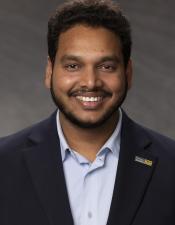
Dr. Praveen Kumar Guraja is a Tenure-Track Assistant Professor of Cybersecurity and Information Technology in the Department of Applied Computing & Geomatics at the Oregon Institute of Technology (Oregon Tech). He develops and teaches courses in cybersecurity, IT, and artificial intelligence, and contributes to Oregon Tech’s forward-looking Bachelor of Science in Artificial Intelligence program. He also serves as faculty advisor for the TechSec Club, mentoring students in research, competitions, and the Applied Computing Learning Lab.
Before joining Oregon Tech, Dr. Guraja served as Division Chair, Founding Program Coordinator, and Assistant Professor of Information Technology Management at the University of Pikeville (UPIKE), where he launched undergraduate and graduate ITM programs integrating industry micro-credentials with experiential learning. His leadership helped UPIKE’s IT Club earn multiple national awards from the USITCC.
Dr. Guraja’s research focuses on the intersection of AI, cybersecurity, and data analytics, exploring how AI-driven systems enhance decision-making, strengthen security, and promote inclusion in underrepresented communities. He has published in peer-reviewed journals, presented at national and international conferences, and collaborated on NSF and NIH-funded projects.
His academic leadership encompasses grant writing, curriculum design, and student mentorship, securing over $50,000 in research and experiential learning funding for students. Dr. Guraja has received numerous honors, including the 2025 Excellence in Research Award, the 2022 Provost Award for Faculty Excellence and Leadership, the 2024 ACA Faculty Fellowship, and induction into Epsilon Pi Tau, the international honor society for professionals in technology.
A first-generation college graduate, Dr. Guraja actively serves on professional committees and advisory boards with organizations such as AAAI, IEEE, ACM, ATMAE, ASEE, and ISSA, inspiring the next generation of innovators in cybersecurity, IT, and AI.
Dr. Guraja also brings over a decade of industry experience in IT operations and enterprise systems, having served in technical and leadership roles at Pittsburg State University, Automatic Data Processing (ADP), Unisys India Pvt. Ltd., and Genpact India Pvt. Ltd. His professional background in systems administration, database management, and enterprise IT services informs his teaching and applied research.
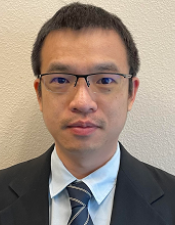
Dr. Lee has a multidisciplinary background including electrical engineering, mechanical engineering and material science. He is an assistant professor at Oregon Tech teaching robotics automation and engineering instrumentation.
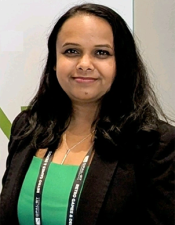
Dr. Shruti Singh earned her Ph.D. in Electrical & Computer Engineering from the University of Denver. She teaches courses in Digital Design, Embedded Systems, Microprocessor Systems, Mechatronics, and Power Systems with a focus on hands-on and experiential learning. She also actively advises senior design capstone projects.
Her research explores autonomous systems, renewable energy systems, microgrids, and sustainable engineering education. She has collaborated on projects funded by the National Science Foundation (NSF), IEEE Power & Energy Society, Amazon, and National Renewable Energy Laboratory (NREL). She is an active member of IEEE, ASEE, and SWE. In addition to her research, Dr. Singh is passionate about mentoring students and preparing them for careers at the intersection of technology and sustainability.
College of Health, Arts and Sciences (2-year terms)
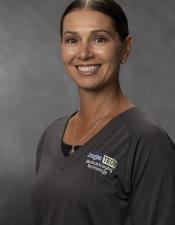
Vice President, OT-AAUP
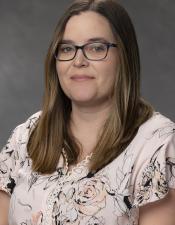
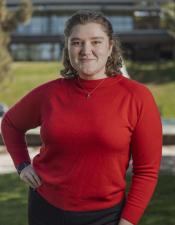
Stacie grew up in Klamath Falls and graduated from Oregon Tech in 2011 with a Bachelor of Science in Dental Hygiene. After graduation she worked as a clinical dental hygienist at various private dental offices in Southern Oregon. She has been working as an adjunct instructor in the dental hygiene department at Oregon Tech since 2016 and in 2022 became a full-time faculty member in the department. Teaching responsibilities have included dental ethics, head/neck anatomy, histology/embryology, and pharmacology. She also works as a clinical instructor as well in radiology labs. Stacie is currently working on completing her Master of Science degree in Allied Health from Oregon Tech, expected to graduate Summer 2023. In her downtime she enjoys camping and four wheeling on the sand dunes at the Oregon coast with her husband, stepson, and her two dogs.
Dr. Nupur Pande received her Ph.D. in Molecular Biology and Biochemistry from the University of California Irvine, holds a MSc. in Chemistry from Lucknow University, India, and was a post-doctoral fellow at UC San Francisco. She was a postgraduate researcher at the Vaccine and Gene Therapy Institute, Oregon. She held a faculty position at OHSU before coming to Oregon Tech PM in 2021. She teaches the Gen-Ed chemistry Courses at the Oregon Tech PM campus where she is keenly interested in developing research-based learning and teaching techniques for engaging and preparing her student population for today’s modern work environment.
She has studied molecular mechanisms discovering immune evasion genes of viral infection at the maternal-fetal interphase, the effect of dietary phytonutrients in programmed cell death pathways, and its genomic and proteomic consequences in cancer. She is deeply interested in identifying disease marker(s) and natural chemistries for devising methods that can detect cancers early.
She spends her free time designing garden spaces, working in her makeshift lab in the garage, taking lessons in world cuisine, hiking, going wine tasting, supporting animal rights, and reading books on the history of Science.
I have been a member of the Natural Sciences faculty at Oregon Tech since Fall 2000. I mainly teach biochemistry and clinical pharmacology in our Biology-Health Sciences (BHS) program, although sometimes I have taught other courses too, including medical genetics, organic chemistry, immunology labs and general chemistry labs. I am proud of all the places of our alumni have gone on to, which are often into post-graduate medical programs like medical doctor, pharmacist, dentistry, physician assistant, veterinary medicine, physical therapy and others. All of these are focused differently from my own educational background, so I make it a priority to help my students think about biochemistry in ways that are applicable to medicine, rather than memorizing a bunch of facts that they could look up and will forget anyway. If you ever meet one of my former biochemistry students, ask them “how much wood could a woodchuck chuck?”—chances are they will remember it from my class, and maybe even how the woodchuck analogy can help explain enzyme kinetics.
I also advise students in our BHS program, and I am always eager to meet with prospective students, or to answer their questions by phone or email.
Outside of classes, I have been a mentor for a variety of undergraduate research projects. Currently I am working with students to study the molecular genetics of cyanobacteria (blue-green algae) in nearby Upper Klamath Lake, along with our department’s microbiologist, Professor Kamal Gandhi. My previous student-involved projects have included cloning of particular bacterial genes/proteins that had never been closely studied before, creation of a home-built fluorescence microscope with 3D-printed parts, finding errors in published, experimentally determined 3D molecular structures of proteins, and developing a simple method to test for gene variants in a dopamine receptor that has been linked to ADHD and risk-taking behavior.
In our cyanobacteria project, students isolate and quantify DNA from bacteria sampled from Upper Klamath Lake, and develop PCR (polymerase chain reaction) methods to identify which species are present and in what proportions. We also send out some samples for full-genome sequencing and analyze the massive amounts of data that come back from that. Along with being involved in genuine scientific discovery, students learn to work independently and as a team in the lab, develop and troubleshoot experimental protocols, and present their results to the university and at regional conferences.
The cyanobacteria that we study are ecologically interesting and important because they affect water quality in the lake—some of them produce toxins while others are harvested as healthy nutritional supplements. The balance between those opposites changes seasonally over each summer and likely between different locations in the lake. Upper Klamath Lake is also home to two species of critically endangered suckerfish (c’waam and koptu) that are culturally important to the Klamath Tribes. Every summer, the hatchlings of these fish have been dying off, so that while there are still some long-lived older fish, they are not able to be replaced in the lake. There is no one factor that controls the non-survival of the juvenile suckerfish, but the role of cyanobacteria, the toxins they produce, and the effect they have on oxygen depletion in the water are all worthy of further study in hopes of helping the fish.
Before I came to Oregon Tech, I earned a BSc (Honours) in Biochemistry from the University of Alberta (I’m Canadian, eh!), a Ph.D. in Chemistry from University of Oregon in Eugene, and did post-doctoral research at University of Texas Southwestern Medical Center in Dallas. I also was a partner in a computer software consulting business for a few years.
When I’m not working, some of my hobbies include running, backpacking and camping. Last year my daughter and I took an amazing 9-day wilderness backpacking trek north of the Arctic circle on Baffin Island in Canada. I’ve climbed on Mt Shasta a bunch of times, including a couple where I guided former students to the summit. I often bicycle-commute to campus including in the snow, and I use my mountain bike, road bike and tandem bike for fun. In the summer of 2021, my spouse and I logged 1000 miles on our tandem in five months, doing various day rides all over Oregon.
Senators-at-Large (3-year terms)

Ben has been teaching Literature and Humanities courses as part of Oregon Tech's Humanities and Social Sciences department since 2013. His courses cover a wide variety of subjects under the larger umbrella of "The Humanities," but recently his focus has been on the environmental humanities in particular: he currently offers courses in American Nature Writing and Climate Fiction Literature and Film (among all the others). He was promoted to full Professor in 2023 and went on a research sabbatical during the 2023-2024 academic year to begin work on a new book project, which combines personal nonfiction and academic argumentation to advocate for a more holistic conception of the natural world's place in our lives. These days, he is continuing work on the book in hopes of turning it into a formal proposal to publishers. He is also collaborating with the AIRE Center to introduce a humanistic perspective to what is already an interdisciplinary endeavor.
Outside of work, Ben spends as much time hiking and sleeping on the ground as possible. He also loves going on lots of hikes, walks, and road trips throughout the West with his wife and two heelers. When he's recovering from all of the outdoor activities, he loves reading fiction and non-fiction, playing pretentious, artsy video games, writing songs, playing the guitar, and listening to jam bands. Somewhere in there, he occasionally sleeps.

Ed Clint is a native of Illinois and an Air Force veteran. He earned his bachelor's degree in Psychology, master's in Anthropology from the University of California, Los Angeles, and doctorate in Neuroscience from the University of Illinois. Dr. Clint's research has focused on evolutionary hypotheses in cognition, health, and mental health, particularly post-traumatic stress disorder. He has taught several years of courses in psychology and anthropology and gained experience in analyzing large data sets to investigate hypotheses. While off campus, he enjoys science writing, running, hiking, and kayaking. He enjoys travel in pursuit of the novel, unique, and weird.
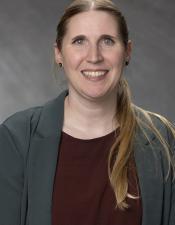
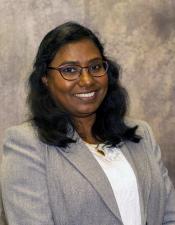
Dr. Chitra Venugopal’s academic and professional background combines science and engineering (BEng in Electronics, Communication and MEng in Power Electronics and Drives from Bharathidasan University and Ph.D. in Electrical Engineering from Sastra University). Her professional experience includes researcher in power system and power electronics field and published many research articles. Dr. Chitra is a senior member of the IEEE, a member of Eta Kappa Nu (the international honor society for electrical engineers). She joined the Electrical Engineering and Renewable Energy (EERE) department at Oregon Tech in 2018 where is now a tenure track Assistant Professor. Dr. Chitra currently serves as the program director of the BS Renewable Energy Engineering Program, Portland – Metro Campus. Her areas of teaching include power system, power electronics, electric power conversion and grid integration. Her current research focuses on smart grid integration of renewable energies, demand response and grid oscillations, power converters for nano and micro power applications, smart drives including PLCs, intelligent converters for EVs.
Administrators (ex officio)
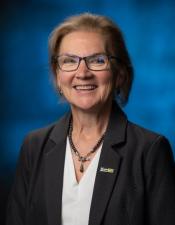
Dr. Neslihan Alp is Dean of the College of Engineering, Technology, and Management at Oregon Institute of Technology (Oregon Tech), a position she has held since January 2024. Previously, she served as Vice President for Academic Affairs and Provost at Pennsylvania College of Technology, Dean of the Bailey College of Engineering and Technology at Indiana State University, and Associate Dean and Professor at the University of Tennessee at Chattanooga.
Dr. Alp earned her B.S. in Engineering Management and M.S. in Industrial Engineering from Istanbul Technical University and her Ph.D. in Engineering Management from the University of Missouri-Rolla. She has authored more than 100 publications and has secured over $50 million in grants and philanthropic support throughout her career. Her academic leadership includes developing and expanding programs in emerging and high-demand fields, advancing online education, and strengthening industry and workforce partnerships.
A licensed Professional Engineer and Fellow of the American Society for Engineering Management, Dr. Alp has received numerous awards for teaching, research, service, leadership, and contributions to diversity in STEM. She serves as an ABET Commissioner and was elected to the Board of the National Institute for Engineering Ethics (NIEE) for a three-year term beginning July 1, 2026.
Interinstitutional Faculty Senate (3-year terms)
Administrative Council
Academic Council
Library (2-year terms)